Table of Contents (11 sections)
What is Animal Migration?
Animal migrations refer to the large-scale movements of species from one habitat to another, often seasonally or annually. These journeys are crucial for breeding, obtaining food, or avoiding harsh climates. Migratory behavior is observed in numerous species, including insects, birds, mammals, and fish, each displaying unique patterns and distances based on their ecological needs.
Animal migrations have fascinated scientists for centuries, who study these patterns to understand ecological impacts and evolutionary processes. According to WWF, approximately 1,800 migratory bird species represent 19% of the world's avian diversity. Understanding migration helps conserve species, protecting the biodiversity critical for ecosystem balance.
Famous Animal Migrations
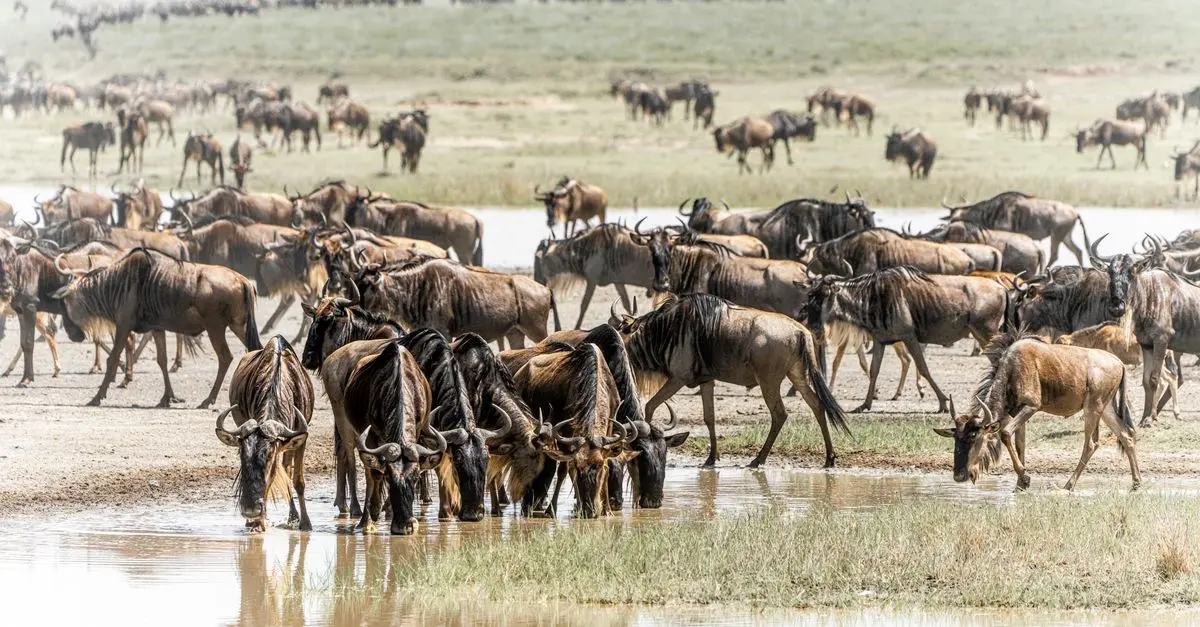
Some of the most iconic animal migrations include the Great Migration of wildebeests through the Serengeti, the perilous journey of monarch butterflies across North America, and the annual flight of the Arctic tern — known for its round-trip covering over 44,000 miles.
The Great Migration sees approximately 1.5 million wild animals, including wildebeests and zebras, annually crossing the Mara River. This event highlights both the strength and vulnerability of wildlife, as predators like crocodiles and lions consider migrating animals as prey. Moreover, the monarch butterfly's journey, spanning from Canada to Mexico, underscores the importance of specific habitats for reproduction and survival.
How Do Animals Navigate?
Navigation during migration is a complex interplay involving both innate and learned behaviors. Birds, for instance, utilize the Earth's magnetic fields, stars, and even the sun's position to guide their path. Similarly, marine species like humpback whales rely on echolocation and environmental cues such as water temperature.
Migration methods can be particularly astonishing. Studies show that young birds often learn routes through memorization and social input. This learning mechanism is critical for adaptation within changing environments. According to research by Cornell Lab of Ornithology, low-frequency sounds known as 'infrasound' are vital for birds to navigate long distances.
Challenges Faced During Migration
Migratory animals endure numerous challenges. Habitat loss due to human activities, climate change, and natural predators significantly affect their journey. For instance, birds encounter obstacles such as tall buildings and power lines, leading to collisions.
Additionally, changes in climate can alter migration schedules and routes, impacting breeding and survival rates. According to studies published in Science Advances, nearly 37% of migratory bird populations have experienced decline due to habitat alteration stemming from climate change and urbanization.
>💡 Expert Opinion: Animal migrations offer crucial ecosystems services, such as seed dispersal and nutrient cycling. Protecting these journeys is vital for maintaining biodiversity. — Dr. Emily Hartman, Ecologist
The Role of Climate Change
Climate change profoundly affects animal migrations by altering habitats and shifting the availability of resources. As seasons fluctuate, so do breeding and feeding patterns, adding stress to migratory species. According to the IPCC, changes in temperature and precipitation impact food sources and ideal breeding conditions for many migratory species.
Adaptation is essential, yet many species struggle to keep pace with the rate of climate alteration. Conservation efforts that focus on preserving and restoring habitats are crucial to ensure survival. Programs that maintain biodiversity and natural landscapes help mitigate some impact of climate change on migrations.
📺 Resource Video
> 📺 For further insights: Understanding Animal Migrations - Detailed Journey, an in-depth analysis of animal migrations. Search on YouTube: “animal migrations documentary 2026”.
FAQs
- What triggers animal migration?
Animal migrations are typically triggered by seasonal changes, availability of resources, breeding, or environmental conditions.
- How do animals know where to migrate?
Many animals use navigation tools like magnetic fields, star constellations, and solar positioning to determine direction.
- What are the advantages of migration for animals?
Migration allows animals to access food, suitable breeding grounds, and favorable environmental conditions.
- Can climate change stop migrations?
Climate change can disrupt natural migration patterns but does not necessarily stop the journeys. It can lead to altered routes or timing, posing greater risks.
Glossary
| Term | Definition |
|---|---|
| Migration | The seasonal movement of animals from one region to another. |
| Navigation | The ability of animals to orientate and travel to distant locations. |
| Echolocation | The use of sound waves to locate objects, used by certain marine animals. |
Checklist
- [ ] Understand the key triggers of animal migrations.
- [ ] Explore famous examples like the Great Migration.
- [ ] Identify how animals navigate long distances.
- [ ] Consider the challenges faced during migrations.
- [ ] Recognize the impact of climate change on migration patterns.
Quiz rapide
> 🧠 Quiz rapide: What is one main reason animals migrate?
> - A) To find colder climates
> - B) To escape predators
> - C) To find food and breeding grounds
> Réponse : C — To find food and breeding grounds